The first time I sailed into the Yokohama Osanbashi International Passenger Terminal at 6:00 AM, I realized I had been doing Japan travel the hard way for years. After 50+ trips using the JR Pass and dragging suitcases through Shinjuku Station, waking up to the sight of the Bay Bridge without having to pack a single bag was a revelation. A Japan cruise offers a unique lens on the archipelago, connecting major hubs like Hakata and Kobe with hidden gems like Otaru. While the upfront cost for a 7-day trip on a ship like the Diamond Princess often starts around ¥180,000 ($1,200), the lack of transit stress makes it a compelling alternative to traditional land tours. However, it is not without its hurdles—onboard Wi-Fi is notoriously pricey, and navigating the shore excursion programs requires some tactical planning to avoid overpaying.
How to Handle Japan Cruise Immigration and Boarding
Cruise boarding in Japan follows a specific Customs, Immigration, and Quarantine (CIQ) protocol that generally takes between 45 to 80 minutes depending on the port size. You must have your passport, cruise boarding pass, and a correctly filled-out Japan immigration form ready before arriving at the terminal. Most major lines will provide these forms in advance, but I always keep a pen handy for last-minute checks at the pier.
Navigating Yokohama and Hakata Terminals
The Yokohama Osanbashi International Passenger Terminal is a masterpiece of wooden architecture, but it is a long walk from the nearest station. I recommend taking a taxi from Nihon-odori Station (Minatomirai Line); it costs about ¥600 ($4) and saves you a 15-minute trek with luggage. If you are starting from the Hakata Port International Passenger Terminal in Fukuoka, the bus system is efficient, but the lines for the 80 or 88 bus to Tenjin can be long. Always check for major port luggage lockers if you arrive early, though they fill up by 10:00 AM during peak season.
Understanding the CIQ Process
The cruise boarding procedures and CIQ (Customs, Immigration, Quarantine) in Japan are strict but organized. Unlike airports, you often hand over your passport to the cruise staff for the duration of the trip, receiving a photocopy for shore use. Make sure your cruise travel insurance specifically covers maritime travel, as standard plans sometimes exclude medical evacuations at sea. I once saw a passenger denied boarding because their insurance didn't meet the specific carrier requirements—don't let that be you.
"Royal Caribbean Cruises is considered an 'innovation' in the industry for its ability to blend high-tech amenities with traditional maritime hospitality." — JoongAng Ilbo [1]
Choosing Your Cabin and Onboard Lifestyle
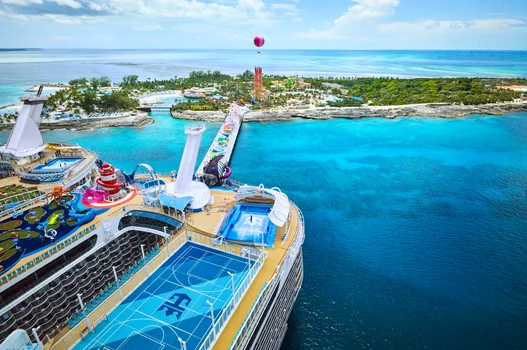
Deciding between an inside cabin vs a balcony cabin depends entirely on your budget and how much time you spend in your room. Inside cabins are budget-friendly, often saving you ¥50,000 ($330) per person, but they lack natural light, which can make it hard to wake up. Balcony cabins are essential for scenic routes like the Kanmon Straits, where the view is the main attraction.
Dining and Dress Code Reality
The main dining room dress code is usually "smart casual," which means no flip-flops or tank tops for dinner. While the onboard buffet and specialty restaurants offer variety, I found that the free main dining room often provides better quality for the price. If you want a break from the crowds, specialty restaurants usually charge a cover fee of ¥4,500 ($30) to ¥7,500 ($50) per person. One honest downside: the coffee in the free buffet is often mediocre. I usually buy a coffee card for about ¥5,000 ($33) to get real espresso at the ship's cafe.
Connectivity and Service Fees
The onboard Wi-Fi package prices are steep, often starting at $20 (¥3,000) per day for one device. To save money, I rely on a pocket Wi-Fi rental for when I am at the port and only use the ship's Wi-Fi for essential messaging. Also, remember that onboard service charges and tips are usually added automatically to your bill—expect to pay about $16 to $18 (¥2,400 to ¥2,700) per person, per day, unless you are on a luxury line where these are included.
| Feature | Cruise Travel (Japan Route) | Land Travel (JR Pass/Hotels) |
|---|---|---|
| Luggage Handling | Unpack once; stays in cabin | Dragging bags through stations |
| Daily Transit | Travels while you sleep | 4-6 hours on trains/buses |
| Dining Costs | Included (Buffet/Main Dining) | ¥5,000 - ¥15,000 per day extra |
| Flexibility | Fixed itinerary | Fully customizable |
Maximizing Your Time at Port Destinations

Shore excursions are where most travelers lose their budget. A guided Kanazawa Kenrokuen tour through the ship might cost $150 (¥22,500), but you can take a local loop bus for ¥600 ($4) and pay the ¥320 ($2) entry fee yourself. The key is knowing which ports are walkable and which require a shuttle.
The Best Shore Excursions in Japan
In Nagasaki, the Glover Garden is a short tram ride or a 20-minute walk from the pier. For those stopping in Hokkaido, an Otaru Canal cruise is beautiful but often crowded; I suggest walking the backstreets for better glass-blowing shops. If your ship docks at the Kobe Port Terminal, accessibility is fantastic—the Port Liner train connects you to Sannomiya Station in just 10 minutes for ¥210 ($1.40).
Shopping and Practical Port Tips
Many ports offer an Aeon Mall port shuttle bus for free or a nominal fee of ¥500. This is the best place for drugstore duty-free shopping (Don Quijote or Matsumoto Kiyoshi) without the Tokyo crowds. When you get off the ship, the port taxi base fare is usually around ¥600 to ¥700. Most drivers do not speak English, so have your destination written in Japanese or pinned on Google Maps. If you need cash, use the onboard currency exchange service only as a last resort, as the rates are usually 10-15% worse than local 7-Eleven ATMs at the port.
Checklist for First-Time Cruisers
- Avoid the hassle of checking into new hotels every two days.
- Minimize the physical fatigue of walking 15,000+ steps between train transfers.
- Download offline Google Maps for each port to save on data costs.
- Pack a formal outfit for the one or two "Gala Nights" held on most 7-day itineraries.
Cruising Japan isn't about seeing every single temple; it's about seeing the coastlines that most tourists miss. While you lose the flexibility of a late-night izakaya run in Shinjuku, you gain the serenity of the Seto Inland Sea. For your first time, I recommend the Korea-Japan cruise routes that stop in Busan and Fukuoka; it's a great way to experience two cultures in one week without the airport stress.
Frequently Asked Questions
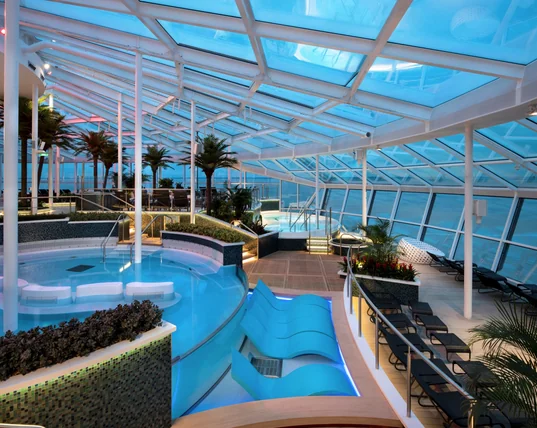
How much does a Japan cruise cost?
A 7-day itinerary on the Diamond Princess starts from approximately ₩1,800,000 (¥180,000). This cost includes cabin accommodation, meals, and access to onboard facilities, making it cost-effective as it solves transportation and accommodation at once.
Japan cruise vs. general travel: Which is better?
The biggest advantage of a cruise is that you can easily travel between multiple cities such as Yokohama and Hakata Port without having to pack your bags every time. It is much less tiring than general travel using the JR Pass and dragging your luggage around, making it highly recommended for.
What are the disadvantages of a cruise?
Onboard Wi-Fi is expensive, and the time for shore excursions is limited, making it difficult to explore specific cities in depth. Additionally, extra costs such as onboard service fees may apply, so it is important to carefully check the inclusions before booking.
How do I pay for cruise tips and service fees?
Onboard service fees are usually automatically charged to the passenger's account per night and can be paid in full upon disembarkation or prepaid at the time of booking. There is no need to directly give separate cash tips, but you can give extra if you receive special service.
How do I do shore excursions on a cruise?
You can pre-book paid shore excursion programs provided by the cruise line, or you can freely enjoy individual sightseeing after disembarking. If it's your first time, it's safer to use the cruise line's programs, especially in easily accessible places like Yokohama Osanbashi International Passenger Terminal, to ensure you return on time.
Sources
- JoongAng Ilbo: The Innovation of Royal Caribbean and the Cruise Industry
- Personal travel logs and expense records from James Park (2022-2024).